Branch workforce management improves credit union operations by replacing backward-looking schedules with live demand forecasts built from appointments, walk-ins, and transaction data. Branch leaders can staff the right roles at the right times instead of relying on last month’s numbers. This can reduce wait times, control payroll costs, and help maintain stronger member service.
Most banks still build branch schedules using outdated traffic patterns and guesswork. But customer demand no longer follows a predictable routine. Appointments, walk-ins, and service needs can change throughout the day. Branch workforce management for banks helps teams use real demand data to plan staffing more accurately. Branch workforce management for credit unions follows the same logic member visits are not evenly spread, and treating every week the same wastes labor and frustrates members. The result is better coverage, less wasted labor, and a smoother customer experience.
This article explains where traditional scheduling falls short and how a data-driven approach can improve branch operations.
Outdated Scheduling Creates Staffing Gaps
Branch schedules often rely on historical averages that do not reflect current customer demand. A busy afternoon, a spike in appointments, or an increase in walk-ins can quickly leave a branch without enough staff in the right roles.
The result is either too many employees during quiet periods or too few when demand increases.
Branch workforce management for banks helps leaders use current demand data to plan staffing more accurately, align employee availability and skills with branch needs, and improve both operational efficiency and the customer experience.
When Lines Grow, And Budgets Shrink
Get the staffing wrong on the low side, and members feel it immediately. Lines grow. Some members give up and leave before their transaction is done, and that is not a missed sale; it is a member who now associates your branch with waiting. Get it wrong on the high side, and the cost shows up somewhere else entirely, in payroll spent on hours nobody needed.
Branch workforce management fixes both problems with the same fix: staff levels that track actual demand instead of an outdated average.
- Fewer members walking out mid-visit during peak hours
- Less payroll tied up in hours nobody needed
- Faster staffing adjustments when demand shifts without warning
Turn Branch Demand Into Smarter Staffing Decisions
Branch workforce management for banks brings together appointment, walk-in, and transaction data to forecast demand across the day, week, and month. Instead of waiting for staffing problems to appear, branch leaders can identify upcoming demand and adjust coverage in advance.
As appointments change and new bookings come in, forecasts can reflect the latest demand. This gives managers a clearer view of when more staff may be needed and when resources can be allocated elsewhere.
The result is more balanced staffing, shorter wait times, and a smoother experience for both customers and branch employees.
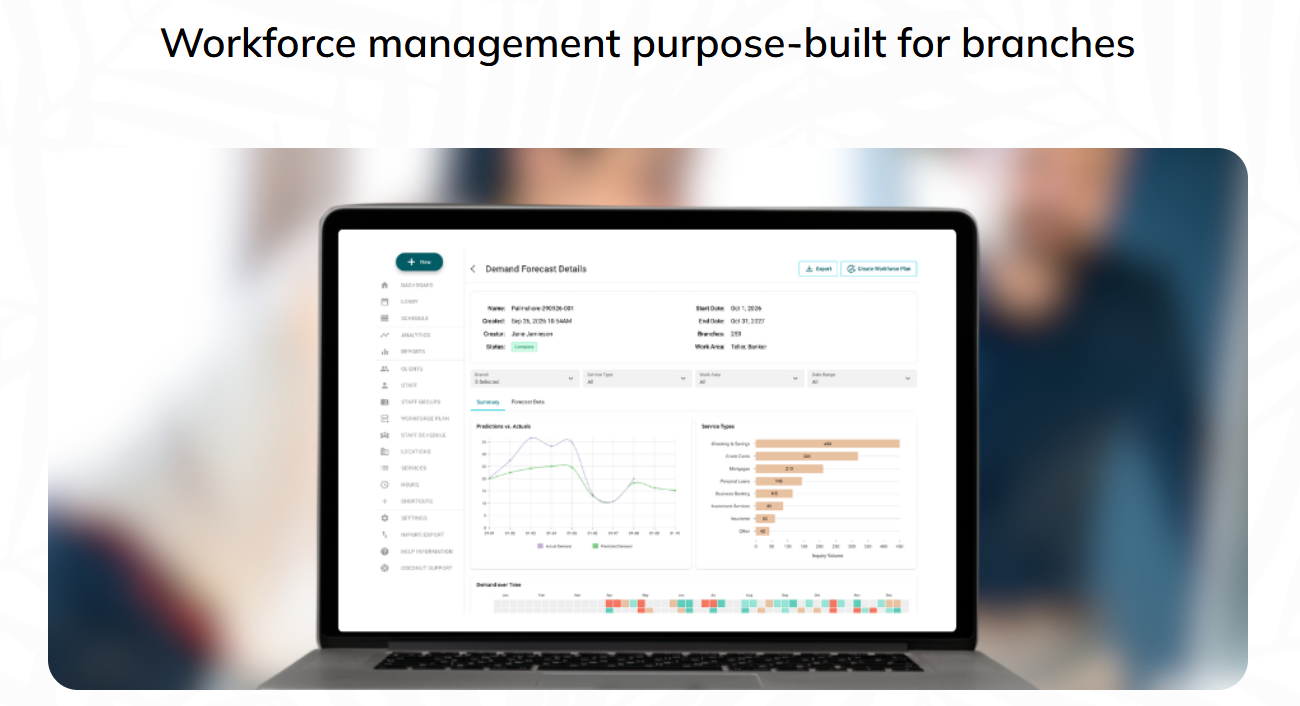
Image Source: Coconut software
What Credit Union Teams Gain From The Switch
Branch workforce management solutions deliver value across finance operations and member experience.
- Stronger forecast accuracy: Planners get real numbers instead of rough guesses. This builds trust with finance teams during budget season.
- Better FTE utilization: Staff hours align with actual member traffic. No idle hours. No overworked teams during rush periods.
- Improved budget variance: Leaders defend headcount requests with data. This speeds up conversations with finance teams.
- Higher conversion rates: The right staff with the right skills show up at the right time. This means more booked meetings and better outcomes per advisor.
- Better member satisfaction scores: Shorter wait times and knowledgeable staff lead to happier members. Happy members stay loyal longer.
- Less time on manual scheduling: Teams spend less time fixing schedules and handling last-minute escalations. They spend more time on real branch work.
These benefits stack together. A credit union that gets scheduling right sees ripple effects across the whole business.
Scaling Past One Branch Into A Full Network
Branch workforce management at enterprise scale covers far more than a single branch. Large institutions manage hundreds of locations across different regions. Each branch carries its own demand pattern shaped by local factors.
Enterprise-grade platforms handle this complexity. They forecast at the branch level while giving central teams a full network view. Regional leaders compare performance across branches. They spot trends and share best practices across the network.
A branch in a college town has different peak hours than a branch in a retirement community. Enterprise workforce management tools respect these differences. Central teams get consistency in reporting and process. Branch managers keep flexibility to respond to local demand. This balance keeps large networks efficient without stripping branches of their voice.
Build a Branch Workforce That Can Adapt
Branch conditions can change quickly. Staff absences, changing customer demand, and unexpected events can disrupt even the most carefully planned schedule.
Branch workforce management for banks helps teams respond by connecting demand data with daily staffing decisions. Leaders can adjust coverage, move resources where they are needed, and maintain service levels as conditions change.
This creates a more adaptable branch operation:
- Staff is available when and where demand increases.
- Customers experience more consistent service and fewer delays.
- Advisors can spend more time on high-value customer conversations.
The goal is not a schedule that never changes. It is a workforce strategy that helps branches adapt when it does.
Turning Data Into Daily Action
Data alone does not fix branch operations. The real value comes from turning that data into action every single day. A good branch workforce management solution makes this easy for managers who are not data experts.
Dashboards show clear forecasts without complex analysis. Alerts flag upcoming demand spikes before they become a problem. Managers shift staff or adjust hours with a few clicks instead of a long manual process.
This ease of use matters. Branch managers already juggle many tasks. A tool that adds complexity gets ignored. A tool that simplifies decisions gets used every day.
Getting Buy-In Across The Organization
Rolling out branch workforce management takes support from more than branch teams. Finance leaders need clear ROI. HR teams need to understand staffing changes. IT teams need confidence in data security and integration.
Better forecasting naturally builds this buy-in. Finance teams become allies once they see improved budget variance. HR supports the rollout once turnover drops from better shift planning. Branch staff trusts the system once last-minute schedule changes drop.
Getting this alignment early makes the rollout smoother. It also makes long-term results stronger because everyone pulls in the same direction.
Conclusion
Branch workforce management for banks and credit unions is not just a scheduling tool. It is a shift in how institutions think about branch operations. Credit unions can now plan with real confidence instead of guessing from old averages.
The results speak clearly.
- Better forecast accuracy
- Higher FTE value
- Lower administration time
- Stronger member experience
These outcomes matter for any credit union trying to grow in a competitive market. Credit unions that make this shift position themselves for steadier operations and stronger member relationships. The branches that staff smart today will be the ones members trust tomorrow. Real data beats old assumptions every time. Branch workforce management makes that data usable for every team in the organization.