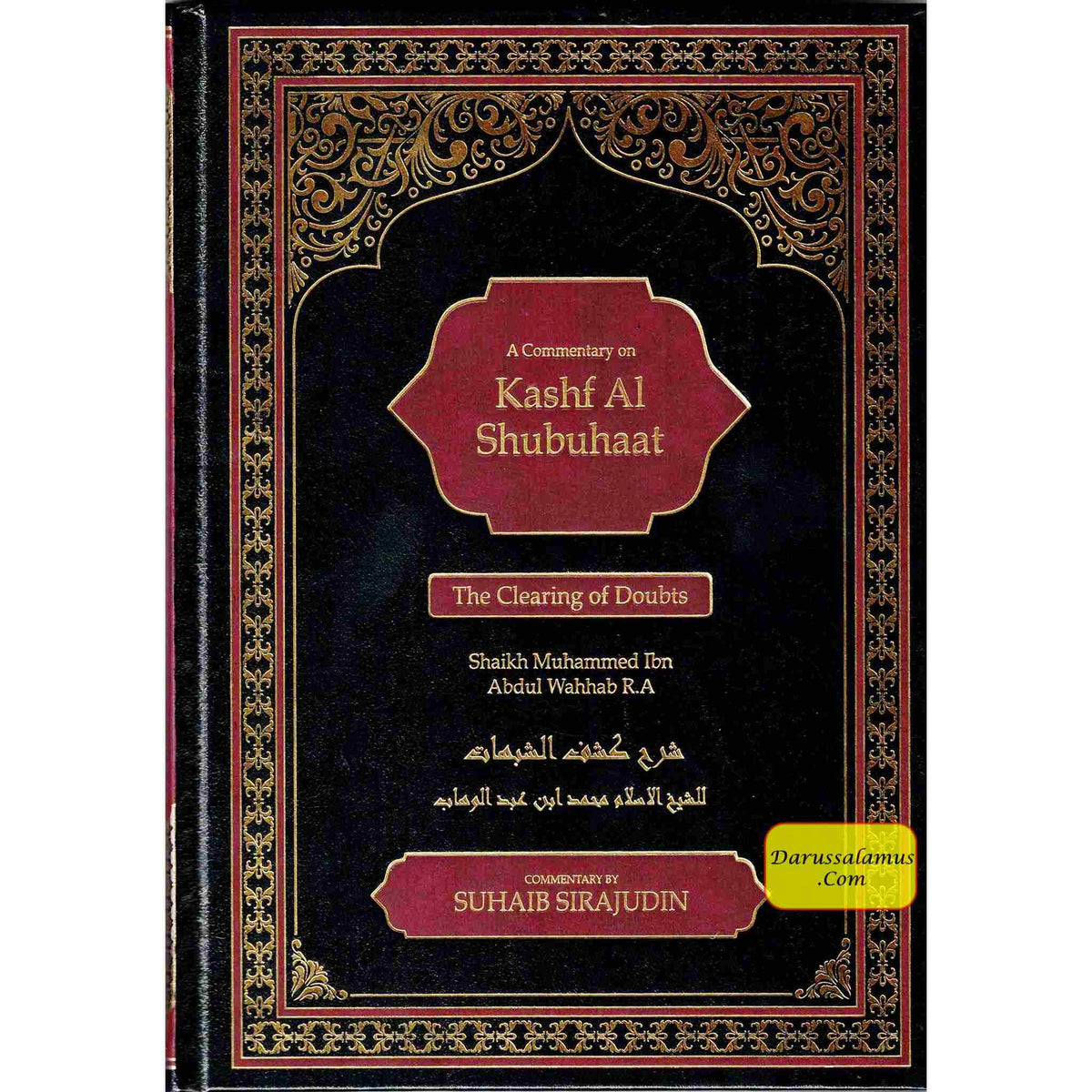
The book “Kashf Al-Shubuhaat” by Shaikh Muhammad Ibn Abdul Wahhab is a most important work in the realm of Islamic scholarship. It has stood out as a critical response to a range of misconceptions about the belief and practice in Islam. In this blog, we will explore the major themes, methods, and the long-term impact of this commentary.
Why is Kashf Al-Shubuhaat Important in Islamic Scholarship?
What is the Context of Kashf Al-Shubuhaat?
Historical Background on the Work of Ibn Abdul Wahhab
Shaikh Muhammad Ibn Abdul Wahhab (1703-1792) is regarded as one of the most prominent scholars for his reformist opinions. He focused on reinstating Islamic practices to their pure form, free from innovations (bid’ah) and superstitions. “Kashf Al-Shubuhaat” was therefore written to eradicate the many doubts and misconceptions in the Muslim community.
In an era in which practices were many degrees removed from the truths of Islam, Ibn Abdul Wahhab made efforts to rectify this position by elucidating and vindicating fundamental teachings. His work covers all-embracing scope about what is necessary to be addressed, hence relevant even today.
The Purpose of Kashf Al-Shubuhaat
The aim of “Kashf Al-Shubuhaat” is to eliminate misconceptions that may lead to misinformation. Ibn Abdul Wahhab makes minute clarifications regarding many misconceptions with clear argumentation and evidence from the Quran and Sunnah. This methodology of explanation serves as a guide for Muslims to help them build their patterns of thoughts regarding Islam.
Significant Themes Covered in the Commentary the Doctrine Regarding Tawhid: The Central Doctrine
Of course, the most relevant themes developed in “Kashf Al-Shubuhaat” are Tawhid, or Oneness of Allah; this is leading. Ibn Abdul Wahhab brings forth several prominent points to the fact that realizing and declaring Tawhid is necessary for true Islamic faith. Besides that, he also demonstrated that deviation from this rule would face severe consequences in life as well as in the afterlife.
In his commentary, Ibn Abdul Wahhab describes all the various ways of polytheism and how people wear them as part of their daily life. He has linked the Quran and its verses to make his point so that the reader is clear about the message and the seriousness of the mistakes that have been found is not underrated.
Role played by the Prophet Muhammad (PBUH)
The commentator has underlined another critical point in the relationship of the Prophet Muhammad (peace be upon him) and Ibn Abdul Wahhab. He explains that merely following the Sunnah of the Prophet is crucial in proper comprehension of Islamic practices. He strongly denounces innovations that strayed away from the original teachings, and he insists that Muslims keep adhering strictly to the authentic sources.
Ibn Abdul Wahhab gives a meaning to such principles in connection with the life of the Prophet and his messages, which serve Muslims as guidelines for their daily life. The former outlaws some of these innovations, thereby turning readers’ attention to strengthen links with the Sunnah as a means of guidance.
Dealing with Innovations (Bid’ah)
There is an ongoing theme of reformations in religious matters found in “Kashf Al-Shubuhaat.” Ibn Abdul Wahhab explicitly states the hazards inherent with innovations that find no inspiration from the Quran and Sunnah. For instance, he argues that these innovations move people off the right path in Islam.
Comment warns about some apparently innocuous practices which are likely to result in gross misrepresentation of Islam and Islamic teachings. Ibn Abdul Wahhab calls the attention of Muslims to a reevaluation of the first and primary sources of their religion.
Methodology of Ibn Abdul Wahhab textual Approach toward Cultivating Purification of Doubts
Ibn Abdul Wahhab has relied more on the Quran and Sunnah as evidence. All his arguments are strongly presented with references to Quranic verses and authentic Hadith. Its scriptural nature gives huge credibility to the claims he is making for the readers’ proper guide to understanding the issues involved.
Through the scriptures, Ibn Abdul Wahhab empowers the reader with what is known to be useful in effective refutation. This approach fosters thinking and interaction with the book in search of insight about teachings that are normative in Islam.
Interacting with the Counterarguments
By answering several questions, Ibn Abdul Wahhab raises objections that others may raise and immediately disputes them. Thus, he is in a position of acknowledging opinions which may count contrary to his own while showing an all-rounded familiarity with the subject matter. With such an approach, he not only strengthens his argument but also injects a sense of dialogue into the practice of Islam.
Engaging the reader with counterarguments forces the reader to think more critically about the issues at hand. It encourages seeking knowledge but engaging diverse perspectives from a stand within the very core values of Islam.
The Lasting Influence of Kashf Al-Shubuhaat: Shaping Contemporary Islamic Thought
“Kashf Al-Shubuhaat” has always been a positive influence on new Islamic thinking. The emphasis made by Ibn Abdul Wahhab regarding Tawhid, the following of the Sunnah, and the rejection of innovations is felt among the scholars as well as the students. His work is identified to be often cited in modern debates on the Islamic theology and practice.
The commentary inspires reformist movements within the Muslim world and sets believers thinking about their practice and their belief in purer forms of Islam.
A Resource for Educators and Students
The teachings of “Kashf Al-Shubuhaat” are precious to educators and students of Islam. It is straightforward in form and contains clear arguments, thereby fitting the bill of all classes of people. For this reason, it often finds its way into curricula meant to infuse deep understanding of the principles of Islam.
The study of this commentary allows the student to interact with the present-day issues of the Muslim world. The student is thus enabled to float above the maze of discursive topics while remaining anchored in true Islamic teaching.
Practical Applications of Ibn Abdul Wahhab’s Teachings Bolstering Personal Faith
For the individual Muslim, “Kashf Al-Shubuhaat” becomes a source of further strength to one’s faith. By dispelling the doubts and misconceptions misleading them, such readers will develop a much clearer sense of their beliefs, and having these sense, they can negotiate the spiritual journey with confidence.
Furthermore, emphasizing Tawhid in daily life can bring more emotional closeness to Allah. If the concepts explained by the commentary are practiced by individuals, it may strengthen their bonds with the Creator as well as help them improve their worship in everyday life.
Creating Community Conversation
Ibn Abdul Wahhab’s work further encourages dialogue within the community. Common doubts or misconceptions addressed allow for constructive discussions with people concerning their understanding of Islamic teachings. Believers gather to share with one another in unison what they have learned about Islam.
The discussions can further end myths and help in strengthening a common commitment to authentic Islamic practices. In so doing, it helps bond people together while trying to strengthen common faith.
Conclusion: The Timeless Importance of Kashf Al-Shubuhaat
Therefore, “A Commentary on Kashf Al-Shubuhaat. The Clearing of Doubts” by Shaikh Muhammad Ibn Abdul Wahhab is a classic in the Islamic scholarship realm. Its straightforward, honest effort to explain several fundamental also scholarly matters like Tawhid, the mission of Prophet Muhammad (PBUH). The danger of innovations, does have an appeal to and belongs to the understanding of modern minds.
The methodology of Ibn Abdul Wahhab reflected within scripture and actual critical engagement has been helpful to enlighten many doubts and myths. As such, the commentary is relevant to scholars, students, and individual believers.
The readers are encouraged to delve in their understanding of Islam, to strengthen their faith in God. The constructive discourse in the community by reading “Kashf Al-Shubuhaat.” Ibn Abdul Wahhab becomes the torch that leads one in this complex world, which helps in the search for a more authentic way of doing things in Islam.
Read more: A Commentary on Introduction to the Principles of Tafsir By Ibn Taymiyyah