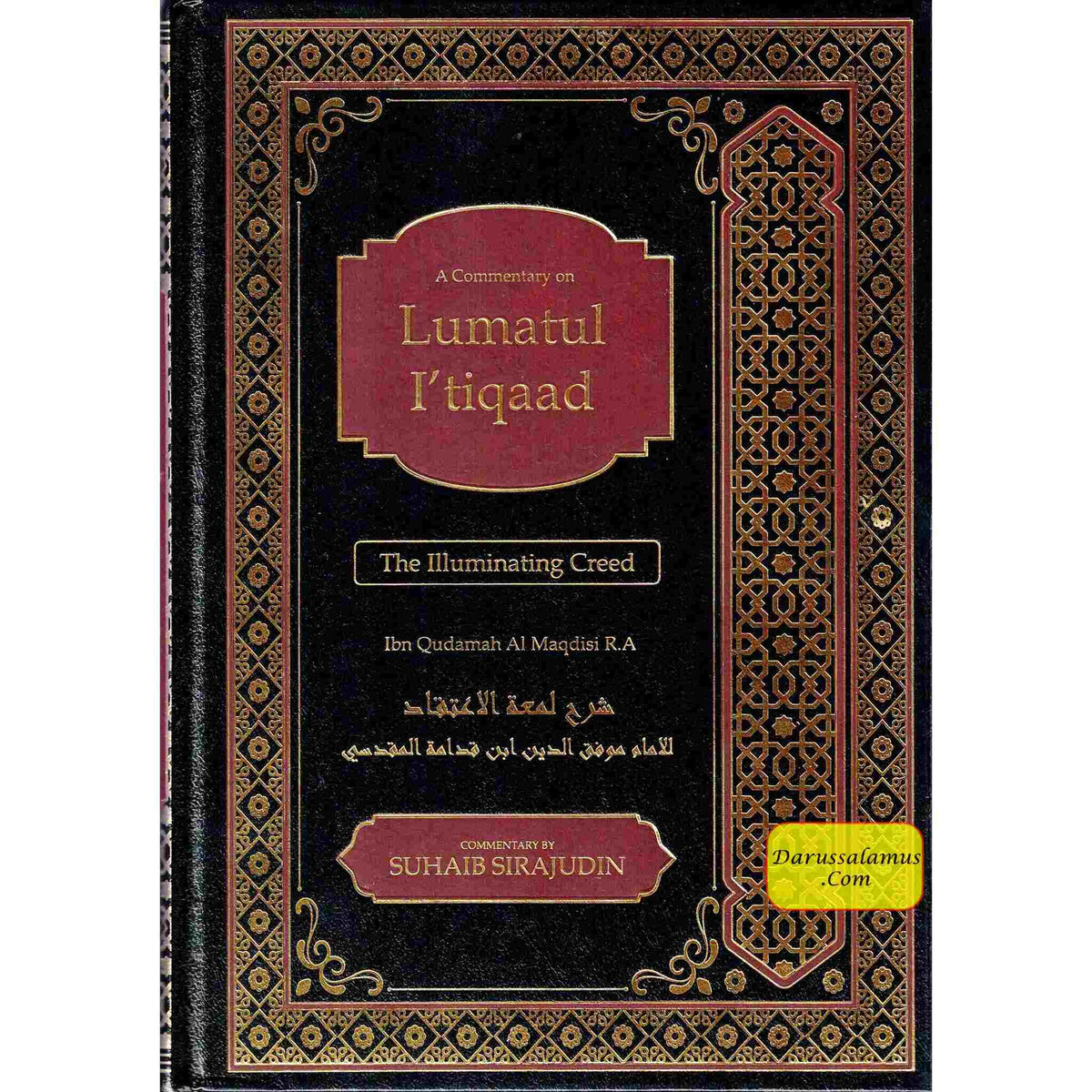
In the rich tradition of Islamic scholarship, “Lumatul I’tiqaad” – for those who know it by its other popular title, “The Illuminating Creed”- comes up as an important work which presents the basic frameworks of Islamic faith. Written by the prominent scholar Ibn Qudamah Al-Maqdisi, this work offers a kind of guiding framework to Muslims interested in getting a hold on and consolidating their faith. This blog shall explore the themes, methods, and lasting influence put forth by this important commentary.
Historical background of Lumatul I’tiqaad Ibn Qudamah Al-Maqdisi: A Short Biography
Ibn Qudamah Al-Maqdisi (d. 1223), one of the most important Islamic scholars, learned very well in fiqh or Islamic jurisprudence, as did he in theology. He is rather known for his contributions on the principles of the Hanbali school of thought. This man was born in Jerusalem, and he spent most of his life studying and giving lectures and teaching various principles. His works are a reflection of a stronger commitment to the principles of the Hanbali school of thought.
“Lumatul I’tiqaad” was written under the influence of several theologic debates which pervaded the Islamic world at this time. Ibn Qudamah, therefore, wrote in a tone that would clarify elementary belief, reaffirming the message of authentic faith in time of fogginess.
About the Commentary
The essence of “Lumatul I’tiqaad” is to uncover the basics of the Islamic creed. Ibn Qudamah makes a point that before embarking to strengthen one’s faith, a person must know these beliefs. Through his commentary, the lies of misconceptions were brought out and structured guidelines made in building the basics of Islamic theology.
Main Themes of Lumatul I’tiqaad oneness of Allah (Tawhid)
One of the core subjects dealt with in “Lumatul I’tiqaad” is Tawhid, or the Oneness of Allah. The great scholar Ibn Qudamah further develops on this important principle of how it impacts a belief system and its behaviors.
The Importance of Tawhid in Islamic Belief
Tawhid is the foundation of Islam. It comprises belief in Allah’s lordship, worshipping Him alone, and the attributes of Allah. Ibn Qudamah explains how a Muslim has to understand Tawhid in his pursuit for real connection with Allah.
This theme makes a point that all kinds of acts of worship have to be just towards Allah. Ibn Qudamah elucidates the dangers becoming an associate of Allah, known as shirk, which clarifies the importance of the purification of faith.
Attributes of Allah
With Tawhid, Ibn Qudamah also discusses the attributes of Allah. He warns that one ought to learn these attributes perfectly to perfect their belief system.
Affirmation of Allah’s Attributes
Ibn Qudamah encourages one to accept Allah’s characteristics from the Quran and Sunnah. He discourages people from misinterpretation and denial of these characteristics and indicates that their recognition must be with faith without falsification or distortion.
Ibn Qudamah explains Allah’s names and characteristics to readers, bringing them closer to the Creator. Knowledge of Allah provides facilitation in complete devotion and worship.
Prophets and the Last Prophet
Another primary theme of “Lumatul I’tiqaad” is belief in prophethood. The considerable anxiety of Ibn Qudamah in his work is that one believes in the Prophets wherein the message is fulfilled, finally by the last messenger, Prophet Muhammad (PBUH).
The Role of the Prophet Muhammad (PBUH)
According to Ibn Qudamah, Prophet Muhammad is a seal of the Prophets and the last messenger that Allah dispatched to the people of earth to guide them. His whole life as well as teachings are the last example of the way of life that the believers will prefer 2.
Following the Sunnah of the Prophet ensures that everything a Muslim does is according to confirmed, authentic Islamic teachings. The theme of the chapter therefore has to do with the necessity to follow the Prophet in all walks of life.
Methodological Approach of Ibn Qudamah scriptural Foundation
An important characteristic of Ibn Qudamah is the use of the Quran and Sunnah to provide evidence. Most arguments are well rooted in scriptural references, so his tafsir is more valid.
Mostly by using Quranic verses and authentic Hadith, Ibn Qudamah allows the readers to understand the theological ideas in their original context. This thus promotes a critical reading of the texts.
Plocale Organisation and Logica Presentation
I ibn Qudamah’s commentary, which because of its systematic nature allows the reader to follow through on the very complex theological discussions.
Each section develops from previous ones in such a way that it creates a logical flow of ideas and helps one comprehend the full depth of the message.
This concept explains why “Lumatul I’tiqaad” is so accessible to scholars and laypeople. Its use of short paragraphs and concise explanations helps in understanding the subject while ensuring that the key message across.
The Long-Term Effect of Lumatul I’tiqaad shaping Islamic Theology
“Lumatul I’tiqaad” has made a significant contribution towards Islamic theology, especially for the Hanbali. Ibn Qudamah articulation of basic beliefs is a reference source, read and digested by students and academics.
Tawhid, which focuses on following the Quran and the Sunnah, remains relevant even in today’s mammoth debates in the corridors of Islamic thought. Many contemporary scholars point to the text to reinforce the relevance of underlying beliefs.
A Source Book for Islamic Studies
The teachings of “Lumatul I’tiqaad” are of significant value in educational settings. Most Islamic centers include this commentary in their curricula to ensure that students are well equipped with a firm basis of theology.
Students can learn and apply basic elements that shape their perception of the faith while studying through Ibn Qudamah’s work. Such a foundation is necessary for spiritual development and scholarly aspirations alike.
Applying Teachings of Ibn Qudamah in Real Life Reinforcing Personal Faith Conclusion
Lumatul I’tiqaad” would make the faith much deeper and enlightened for the Muslims. By reading the commentary, believers learn to read the doctrines which strengthen their bond towards Allah.
This knowledge also contributes towards the real worship since people try to bring their beliefs and actions into line with Islamic thought. The concept of Tawhid and Allah’s qualities raise the spiritual feeling.
Building Intercommunity Discourse
Ibn Qudamah’s work encourages discussion among Muslims. By discussing the frequent theological fallacies that creep into the minds of those in the religion, it allows the believer to have a constructive debate about religion.
This will help eliminate the false ideas and enhance a resolve towards pure teachings of Islam. The community gets united with each other by raising discussions with one another that strengthen collective faith.
Conclusion: “Lumatul I’tiqaad”-Eternal Appropriateness
In a nutshell, “A Commentary on Lumatul I’tiqaad. The Illuminating Creed” by Ibn Qudamah Al-Maqdisi is the history of Islamic scholarship. For example, the critical key aspects of belief such as Tawhid and attributes of Allah are discussed. The discussions make the believers strive to tread on the path of knowing their religion better.
Ibnu Qudamah used the methodology rooted in the book and logical reasoning, so that his audience would be well-capable. Opening up the doors to Islamic theology complexities. In that sense, his work continues to shape many contemporary discussions, so that the lessons he offers are relevant to a scholarly audience and to the broader community.
Studying “Lumatul I’tiqaad” forces one to work for strengthening their faith, for sincerity in worship, and to instill unity among Muslims. The philosophy of these lines has helped people moving towards living an authentic life based on the true doctrine.
Read more: A Commentary on Kitab At-Tawheed By Shaikh Muhammad Ibn Abdul Wahhab R.A