Fast-paced training creates a chain of small decisions. One athlete accelerates, another changes direction, a coach moves a station, and the next group begins before the first has fully cleared the area. Young participants have less experience judging speed and space, so the training environment must leave room for mistakes as well as planned movement.
Begin with traffic flow. Warm-ups, skill stations and waiting areas should not cross each other without a clear reason. A sprint lane that ends beside a queue, doorway or equipment stack creates an avoidable conflict. Coaches can sketch the session layout in advance, then walk the routes at a participant’s height to spot blind corners and narrow exits. That check should include the path back to the queue, not only the active drill.
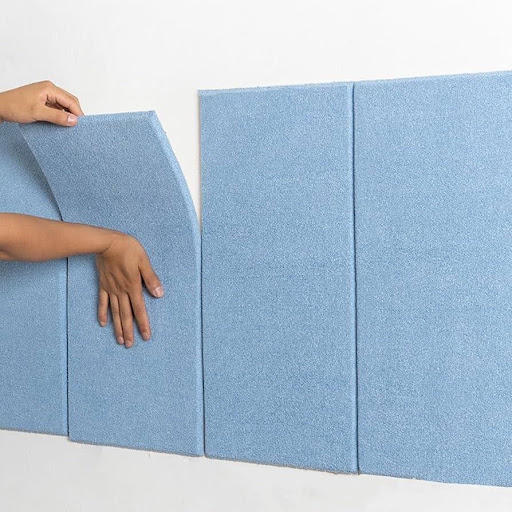
Fixed surfaces need separate attention. Walls, columns and stage edges may sit close to drills that involve chasing, jumping or rapid turns. Wall mats offer impact reduction where contact with a fixed hard boundary remains realistic, but they do not replace suitable distance. Moving the activity farther away usually provides a stronger first layer of control.
The protected area must match the movement. Covering only the middle section may miss the points reached by diagonal runs or off-balance landings. Height matters for jumping and raised activities, while width matters where several lanes approach the same boundary. Doors, switches and equipment recesses can interrupt coverage, so the full surface should be reviewed rather than treated as a plain rectangle.
Secure installation is essential. Loose panels, lifted edges or exposed fixings introduce new hazards. The system should remain stable when brushed, bumped or cleaned, and it should not reduce safe access through an exit. Any installation must follow relevant product guidance and the facility’s requirements.
Training design reduces the chance of contact. Groups should be small enough for the coach to see each attempt, and the next athlete should not start until the route is clear. Progressive drills allow young people to learn stopping, landing and spatial awareness before speed increases. Fatigue also deserves attention because control often declines near the end of a demanding session.
Wall mats should be inspected as part of setting up the activity. Staff need to check covers, seams, attachment points and the condition of the material beneath. A panel that has compressed, shifted or absorbed moisture may not perform as expected. Damage should lead to prompt action rather than an informal decision that the surface still looks acceptable from a distance.
Communication supports the physical layout. Coaches should explain the boundaries, direction of travel and signal for stopping. Athletes need to know what to do when a ball, person or piece of equipment enters their lane. Clear routines reduce sudden choices, especially in sessions where several stations operate at once.
Age and experience change the plan. Younger athletes may follow instructions less consistently and require wider separation between activities. More advanced participants often move faster and generate greater impact, even though their technique is stronger. The same hall therefore needs different layouts for different groups. Copying one setup across every age band may leave too little stopping room.
Shared venues add another layer. Storage trolleys, folded seating, temporary signs and bags may appear between sessions. A quick scan before each activity is more reliable than assuming the space remains as it was. Near misses should be discussed because they identify weak points before an injury occurs.
Protective surfaces also require suitable cleaning and maintenance. Staff should follow the maker’s advice, avoid methods that damage covers, and keep records where the organisation expects them. Replacement decisions should consider performance and secure fit, not appearance alone.
A safer session does not feel slow or restricted. Good flow, clear cues and well-spaced stations let athletes move with purpose. Where hard boundaries cannot be removed, correctly selected wall mats add a useful layer of protection. Their value is greatest when coaching, layout and inspection already work together.